Aluminium Extrusion
Aluminium Extrusion Process
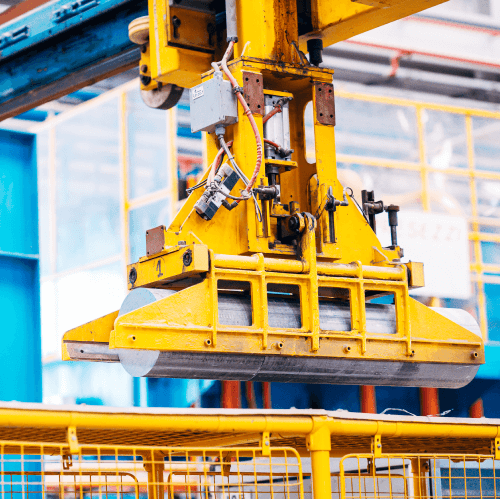
Before extrusion, aluminium billets are uniformly heated to approximately 450–500°C to achieve optimal formability. Once the billet reaches the required temperature, it is driven through precision-engineered dies using controlled pressure, producing profiles with accurately defined cross-sections.
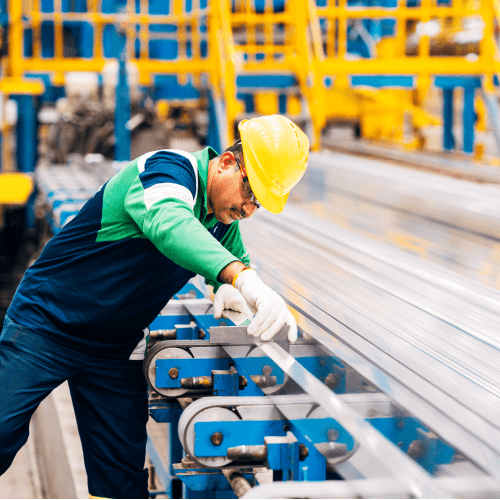
After exiting the press, each profile undergoes regulated cooling and mechanical stretching, ensuring straightness, dimensional stability, and consistent mechanical properties.
We also offer a comprehensive range of surface enhancement and finishing solutions designed to improve corrosion resistance, durability, and aesthetic value. A modern ERP-integrated workflow provides complete production traceability and supports timely delivery of every order.
Extrusion Capabilities
– Press forces from 17.5 MN to 44 MN, suitable for 7-inch to 11-inch billets
– Profile weight range: 0.10 kg/m to 50 kg/m
– Maximum profile width: up to 520 mm
– Profile lengths: up to 15 meters
– Alloys: EN AW 6060, 6063, 6005A, 6061, 6082, and customized alloy options based on application requirements
– Fully engineered and custom-designed profiles produced as per drawings or technical specifications
Surface Treatment Solutions
– Anodizing for corrosion resistance, layer uniformity, and architectural-grade appearance
– Powder coating for enhanced durability and long-term weather protection
– Brushed and polished finishes available for high-end anodized surfaces
These treatments are engineered to increase wear resistance, shield the aluminium from environmental exposure, and provide a wide range of finishes suited for architectural, industrial, transportation, and automotive sectors.
Mechanical & Value-Added Processing
– Precision cutting, drilling, punching, tapping, CNC machining, and other secondary operations
– Design optimization to improve structural performance, reduce material usage, and ensure better manufacturability
Quality Assurance & Inspection
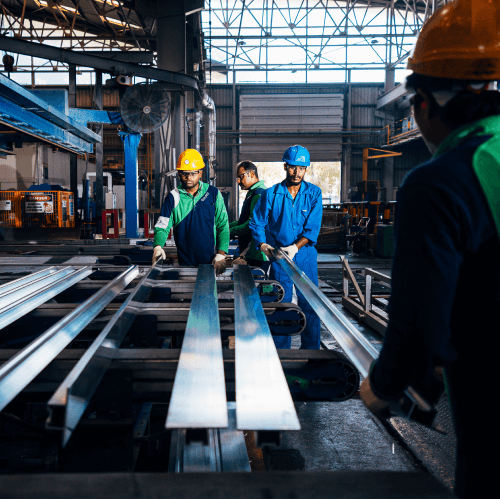
All profiles received from the extrusion press or surface-preparation areas undergo strict visual and dimensional inspections.
Checks include:
– Detection of surface defects such as scratches, dents, and die lines
– Verification of extrusion uniformity and profile integrity
– Identification of oxidation marks or signs of atmospheric corrosion
Only profiles that comply with our quality standards proceed to finishing, packing, or final dispatch.
Extrusion Work Flow
KEY ADVANTAGES
High strength-to-weight performance
Flexible order sizes
Smooth, clean, and consistent profile finish
High-quality Talent
Tight dimensional accuracy
Ideal for both small and large industrial requirements
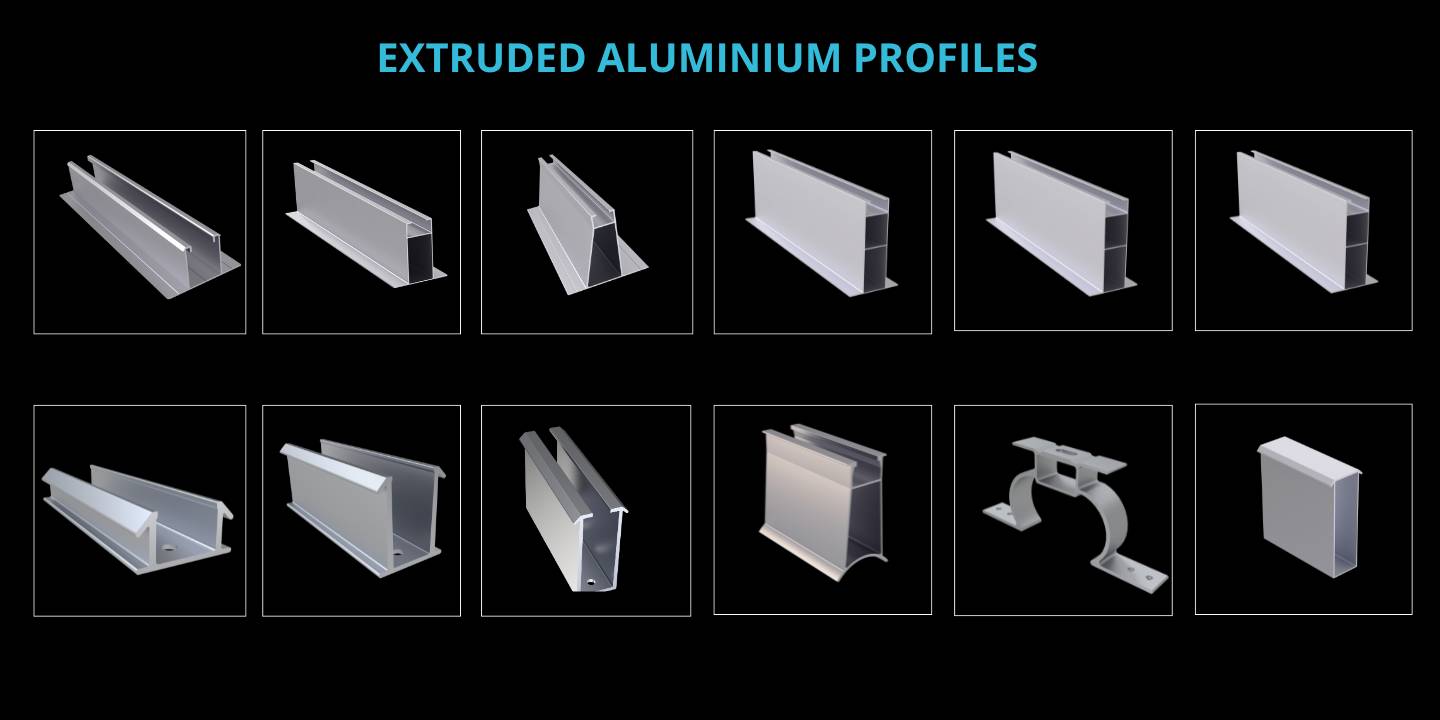
Aluminium Extrusion Profiles
We provide fully customized aluminium extrusion solutions designed to meet a wide range of structural, functional, and visual requirements. Our team supports the development of both straightforward and complex profile designs, ensuring accurate dimensions, consistent quality, and dependable performance throughout production.
⭐ FAQ — Aluminium Extrusion
What is aluminium extrusion?
A process where heated aluminium is pushed through a steel die to create profiles of a specific shape and size.
Can you make custom profiles?
Yes. We develop customized dies based on your drawing, measurement, or application.
Which alloys do you use?
Commonly 6061 and 6063, depending on strength, finish, and application requirements.
Do you provide finishing services?
Yes — anodizing, powder coating, brushing, polishing and more.
Do you offer fabrication?
Absolutely. Cutting, drilling, punching, CNC machining and other fabrication services are available.
How fast is delivery?
Standard sections are available quickly. Custom dies and profiles depend on complexity but are delivered as per committed timelines.